As AI transforms productivity, Microsoft Office remains the anchor of enterprise work—but only if you understand what's truly changed since last year.
The 2026 Office Landscape: Consolidation Around Intelligence
We're halfway through 2026, and the productivity software market has fundamentally shifted. The conversation is no longer about whether AI belongs in Office—it's about which vendors can integrate it without breaking the workflows that millions of professionals depend on daily. Microsoft Office 2024 Professional Plus arrives in this context as something more than a refresh: it's a statement that traditional office suites remain essential infrastructure, even as Copilot and cloud-native tools expand around them.
The market itself has matured considerably. Gone are the days when "the cloud" felt like a distant future. Today, hybrid work is standard, compliance frameworks like NIS2 and SOC 2 are non-negotiable for regulated industries, and AI integration is table stakes rather than a differentiator. For Windows professionals—particularly those in finance, legal, healthcare, and government—Office 2024 Professional Plus isn't a luxury; it's the foundation upon which their digital lives are built.
What's Changed Since 2024: The Quiet Evolution
If you're comparing Office 2024 Professional Plus to its predecessor, the headline features aren't always obvious. There's no single "killer feature" that forces an upgrade decision. Instead, what's shifted is deeper: tighter Copilot integration across Word, Excel, and PowerPoint; improved collaboration signals within Outlook; and stronger alignment with Microsoft 365 security posture for organizations managing hybrid teams across continents.
The real change, though, is philosophical. Microsoft has moved away from treating Office as a standalone product and toward treating it as the interface layer for a larger intelligence platform. That means:
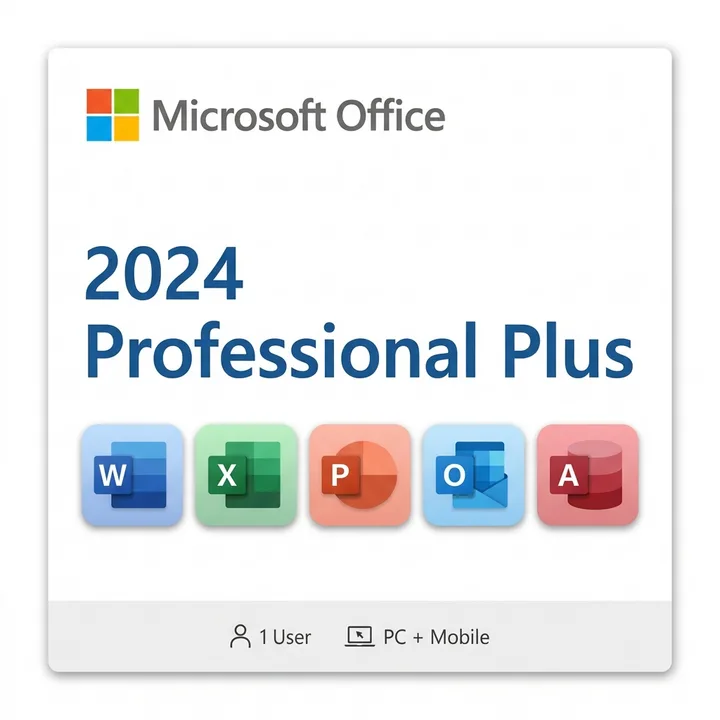
- AI-assisted authoring in Word that understands context and tone, not just grammar.
- Data storytelling in Excel that suggests chart types and insight queries based on your data patterns.
- Presentation intelligence in PowerPoint that flags design inconsistencies and recommends structural improvements.
- Calendar and meeting optimization in Outlook, helping knowledge workers reclaim time lost to scheduling friction.
- Access modernization for database professionals managing legacy systems alongside cloud-based analytics.
None of this requires an internet connection for core functionality—a critical distinction for organizations in regulated industries or those with offline requirements. That balance between cloud-enabled intelligence and local resilience is where Office 2024 Professional Plus finds its strength.
What Serious Buyers Should Evaluate Right Now
If you're deciding whether to adopt or upgrade to Office 2024 Professional Plus in 2026, here are the questions that matter:
First: compliance and data residency. Where does your organization sit on NIS2 compliance? Are you subject to GDPR, HIPAA, or other regulatory frameworks? Office 2024 Professional Plus integrates with Microsoft's broader compliance and data governance tools, but only if you understand your organization's data classification needs. This isn't a feature; it's an architectural requirement.
Second: team composition. Are your teams purely Windows-based, or are you mixing Windows, Mac, and cloud-only workers? Office 2024 Professional Plus is optimized for Windows, which matters for performance-intensive work (large Excel models, complex presentations, database queries in Access). If you're in a mixed environment, you'll need to layer in Microsoft 365 subscriptions for web and Mac sync anyway.
Third: integration depth. How embedded is Microsoft 365 already in your workflow? If you're running Teams, SharePoint, and OneDrive, Office 2024 Professional Plus becomes more powerful—but also more complex. Organizations that are just starting their cloud journey may find the learning curve steeper than expected.
The future of productivity isn't about replacing Office. It's about making Office smarter without making it more complicated.Fourth: offline capability. This matters more in 2026 than it did in 2024. With regulatory scrutiny around cloud dependency and growing concerns about service outages, the ability to work offline in Word, Excel, and Outlook—and sync when connected—remains a genuine advantage over pure cloud alternatives.
Where Office 2024 Professional Plus Fits in 2026
Office 2024 Professional Plus isn't for everyone. If you're a startup using Google Workspace or a creative agency built on subscription-based tools, this won't change your calculus. But for enterprises, professional services firms, financial institutions, and government agencies, it remains the default choice—not because it's trendy, but because it's reliable, compliant, and increasingly intelligent.
The product shines for professionals who need depth: accountants managing complex spreadsheets, lawyers reviewing documents with version control, project managers coordinating across time zones in Outlook, database administrators maintaining mission-critical Access applications, and communicators crafting presentations for global audiences.
In 2026, the question isn't whether Office is still relevant. It clearly is. The question is whether your organization is extracting full value from it—and whether the combination of local power and cloud-enabled intelligence aligns with your compliance, security, and workflow requirements.
If you're evaluating office productivity solutions for your organization, start by auditing your actual needs against your current tooling. Then explore how Office 2024 Professional Plus fits into that picture. The software itself is mature and stable; what matters now is alignment between your workflows, your regulatory environment, and your team's technical sophistication.
For those ready to invest in a proven foundation, Office 2024 Professional Plus remains the strongest choice available. And for a broader look at the 2024 office category landscape, our complete office software guide can help you contextualize the full range of options.