As cloud subscriptions dominate, perpetual licensing remains the pragmatic choice for buyers who demand stability, offline capability, and real ownership of their tools.
The 2026 Office Landscape: Subscription Fatigue Meets Hybrid Reality
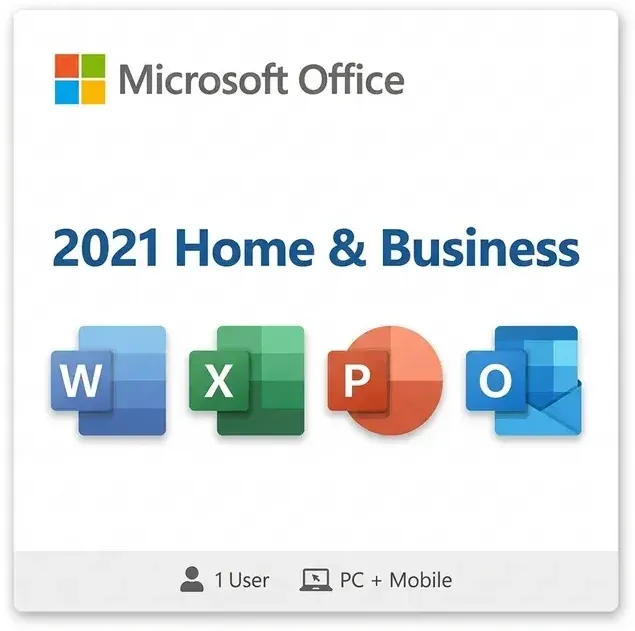
The productivity software market in 2026 is at an inflection point. Microsoft 365 subscriptions have become ubiquitous in enterprise environments, yet a significant cohort of professionals—freelancers, small business owners, hybrid workers in regulated industries—are reconsidering the perpetual-licensing model. Cost creep from annual subscription renewals, combined with growing concerns about vendor lock-in and data sovereignty, has revived interest in standalone office suites. Office 2021 Home & Business sits squarely at this intersection: a one-time purchase that delivers Word, Excel, PowerPoint, and Outlook without monthly billing or forced cloud dependencies.
What's driving this resurgence? Three factors. First, hybrid and remote work arrangements have matured; professionals now spend significant time offline or in environments where cloud connectivity isn't guaranteed. Second, regulatory frameworks like NIS2 in Europe and evolving compliance mandates in North America are pushing organizations to evaluate software sovereignty and data residency more carefully. Third, the total cost of ownership for Microsoft 365 over a five- to seven-year horizon increasingly rivals or exceeds a perpetual license, especially for small teams or solo practitioners.
What Changed Since 2024: The Pragmatism Pivot
Two years ago, the industry narrative was clear: cloud-first, always-connected, subscription-everything. Today, that story has nuance. While Microsoft 365 remains the default for large enterprises, mid-market and SMB buyers are asking harder questions about flexibility and long-term value. Office 2021 has gained credibility in this conversation because it addresses a real operational need: a fully-featured, stable productivity suite that doesn't require continuous internet, doesn't impose recurring costs, and doesn't change its feature set every quarter.
The shift isn't anti-cloud; it's pro-choice. Buyers increasingly adopt hybrid strategies—Office 2021 for core document creation, editing, and collaboration on local networks, paired with targeted cloud services (OneDrive, SharePoint, Teams) for specific workflows. This blended approach offers the best of both worlds: the reliability and offline power of a perpetual license with the flexibility to integrate cloud tools where they add real value.
The future of productivity isn't about choosing cloud or on-premises; it's about choosing which tool fits which job, and doing it without sacrificing control or predictability.What Serious Buyers Should Look For in 2026
If you're evaluating Office 2021 Home & Business, focus on three dimensions beyond the feature list.
Offline Capability and Stability. In an era of SaaS sprawl, the ability to open, edit, and save documents without a network connection remains undervalued. Office 2021 delivers this natively. For anyone whose work depends on uninterrupted productivity—writers, accountants, designers, engineers—this isn't a luxury; it's a baseline requirement.
Total Cost of Ownership. Calculate the real cost: a perpetual license for Office 2021 Home & Business versus three to five years of Microsoft 365 subscriptions at your regional rate. Factor in the cost of managing license compliance, user onboarding, and account administration. For many small businesses and individual professionals, the perpetual model wins decisively.
Integration with Your Existing Ecosystem. Office 2021 works seamlessly with OneDrive, SharePoint, and Teams when you need it, but doesn't force dependency on them. Evaluate whether your workflows benefit from tight cloud integration or whether you'd prefer the flexibility to choose. If your team uses primarily local file systems, network drives, or third-party cloud storage (Google Drive, Dropbox), Office 2021 integrates without friction.
Where Office 2021 Fits in Your 2026 Strategy
Office 2021 Home & Business is the right choice for professionals and small teams who prioritize ownership, predictability, and offline reliability. This includes freelancers managing client documents, small accounting or legal practices with compliance requirements, remote workers in regions with unreliable connectivity, and organizations evaluating software independence as part of broader digital resilience planning.
It's also increasingly relevant for hybrid deployments within larger organizations. A growing number of enterprises are licensing Office 2021 for specific departments or use cases—particularly those handling sensitive data or operating in highly regulated sectors—while maintaining Microsoft 365 for collaboration-heavy teams. This segmentation approach reduces overall software spend while ensuring each team has the right tool.
The productivity market in 2026 isn't binary. It's mature enough to support multiple models coexisting, and sophisticated enough that buyers can now make informed choices based on their actual needs rather than industry momentum. Office 2021 Home & Business represents that maturity: a proven, stable, perpetually-licensed suite for professionals who value control, predictability, and real ownership of their core productivity tools.
Ready to evaluate whether perpetual licensing fits your workflow? Explore Microsoft Office 2021 Home & Business and discover how it compares within our full Office 2021 for PC collection.